
Office of the President
About President Joseph L. Chillo, LP.D.
Joseph L. Chillo is the 15th President of Thomas More University, where he has led a period of transformational growth, institutional advancement, and strategic innovation since June 2019. A nationally respected leader in Catholic higher education, President Chillo is recognized for advancing mission-centered institutions through visionary leadership, collaborative governance, and a commitment to academic excellence, student success, and regional engagement.
President Chillo has positioned Thomas More University for long-term success by aligning strategic planning, philanthropic investment, academic innovation, and community partnerships around a bold vision for the University’s second century. Guided by the institution’s Catholic identity and liberal arts tradition, he has strengthened Thomas More’s reputation as the premier Catholic liberal arts University serving the Greater Cincinnati and Northern Kentucky region while expanding its influence globally.
Central to his leadership has been the successful implementation of the University’s strategic plan, Lighting the Way, which established an ambitious framework for institutional growth and innovation. Under his direction, Thomas More launched the Second Century Campaign: It’s Time for More, the largest comprehensive fundraising initiative in University history. The campaign surpassed its original $30 million goal by raising more than $47.2 million in five years, providing transformative investments in student scholarships, academic programs, faculty excellence, campus facilities, and long-term institutional sustainability.
President Chillo’s tenure has been defined by disciplined strategic growth and measurable institutional outcomes. The University has experienced significant gains in enrollment and student retention while expanding its academic portfolio with new undergraduate and graduate programs across all three colleges. He has championed innovation in the student experience through the introduction of the Second Century Core, a distinctive curriculum rooted in the Catholic Intellectual Tradition that prepares graduates to lead with purpose, integrity, and intellectual curiosity in an increasingly complex world.
Recognizing that thriving institutions must evolve while remaining grounded in their mission, President Chillo has overseen significant investments in the University’s physical and academic infrastructure. His leadership has resulted in the construction of a new academic center, strategic property acquisitions that expand opportunities for students and the surrounding community, and continued investment in facilities that enhance teaching, learning, and campus life. He also guided Thomas More’s successful transition to NCAA Division II athletics, elevating opportunities for student-athletes while strengthening institutional visibility and regional partnerships.
President Chillo believes that universities serve as anchor institutions that drive economic vitality, civic leadership, and regional prosperity. He has intentionally expanded Thomas More’s role as a collaborative partner throughout Northern Kentucky by strengthening relationships with business, government, nonprofit, and community leaders. Under his leadership, the University established its Office of Community and Government Relations within the OneNKY Center in Covington, reinforcing Thomas More’s commitment to regional collaboration and public engagement. Partnerships with organizations such as the Florence Y’alls have further enhanced opportunities for students while increasing the University’s visibility throughout the region.
His leadership has also elevated Thomas More’s national profile. During his presidency, the University has earned increasing recognition from organizations including U.S. News & World Report and The Wall Street Journal while successfully reaffirming institutional accreditation through the Commission on Colleges and Universities. Academic programs across multiple disciplines have likewise achieved reaffirmation from their respective accrediting bodies, reflecting a culture of continuous improvement and institutional excellence.
Beyond the University, President Chillo is an influential voice on the future of higher education, organizational leadership, and mission-driven institutions. He is a frequent speaker at national and regional conferences and has contributed to professional publications, podcasts, and leadership forums focused on the changing landscape of higher education, governance, enrollment strategy, and institutional transformation. He also serves on accreditation review committees for the Commission on Colleges and Universities supporting quality assurance and continuous improvement across colleges and universities throughout the region.
President Chillo’s commitment to civic leadership is reflected in his extensive service to regional and statewide organizations. He serves on the boards of the BE NKY Growth Partnership, the Northern Kentucky Chamber of Commerce, and the OneNKY Alliance, helping shape initiatives that strengthen economic development, workforce readiness, and regional competitiveness. In 2025, he was elected Vice Chair of the Association of Independent Kentucky Colleges and Universities where he helps guide statewide advocacy, governance, and strategic priorities on behalf of Kentucky’s independent institutions. A graduate of Leadership Kentucky’s Class of 2022, he is widely recognized for building partnerships that connect higher education with business, government, and community priorities.
President Chillo’s leadership has earned widespread recognition throughout the region. He was named a NewsMaker by the Northern Kentucky Tribune for his leadership and community service and has been recognized annually by Cincinnati Magazine as one of the region’s 300 Most Powerful Business Leaders, reflecting the University’s growing influence under his presidency.
A first-generation college graduate, President Chillo understands firsthand the transformative power of higher education. He earned a Bachelor of Arts in Political Science and History from Binghamton University, a Master of Public Administration from Long Island University, and a Doctor of Law and Policy from Northeastern University. He has further strengthened his executive leadership through programs offered by the Council of Independent Colleges, the Harvard Graduate School of Education Seminar for New Presidents, and Harvard University’s Institute for Educational Management.
Before joining Thomas More University, President Chillo served as president of Newbury College and previously held senior leadership positions at Colby-Sawyer College, Wheelock College, and St. Thomas Aquinas College. Across more than 25 years in private higher education, he has built a reputation for leading institutions through strategic transformation while remaining steadfast in his commitment to mission, student success, and the enduring value of a liberal arts education.
President Chillo’s leadership is defined by a clear belief that higher education must not simply respond to change—it must shape it. Through strategic vision, principled leadership, and a deep commitment to the common good, he continues to position Thomas More University to educate ethical leaders, strengthen communities, and create lasting impact for generations to come.
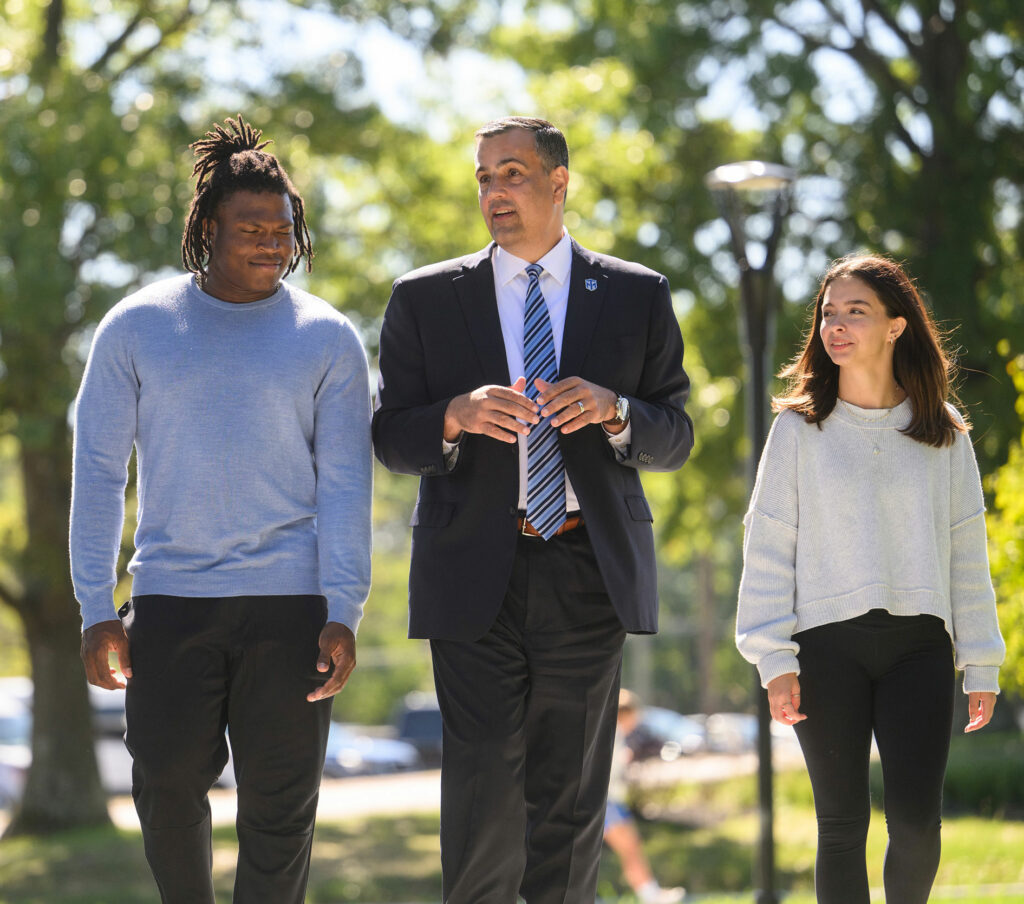
Our students come here looking for more. And that’s exactly what we offer. With a commitment to inclusivity, personalized academic experiences, and student success, the transformative power of a Thomas More education is exciting and relevant.
Presidential Initiatives
Strategic Plan 2021-2026
As Thomas More University enters its second century, the University will propel itself forward through innovation and agility. Built on the themes of student success, academic innovation, and responsible stewardship, Thomas More University will be the premier regional Catholic University. By 2026, we will again be ranked as a top 50 U.S. News Best Regional College.
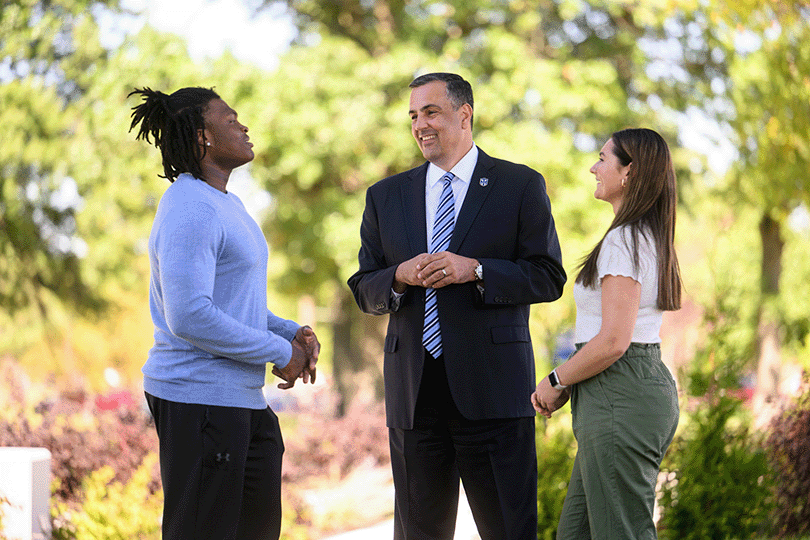
President’s Report 2024
The theme of this year’s report, “Our Place in the World,” resonates deeply with the heart of our University’s mission. How does our distinctively Catholic history and identity shape our Institution’s purpose and aspirations? Several years ago, we set forth an ambitious vision to be known as the premier Catholic university in our region. This report offers a glimpse into how we are bringing this vision to life.
Presidents of the Past
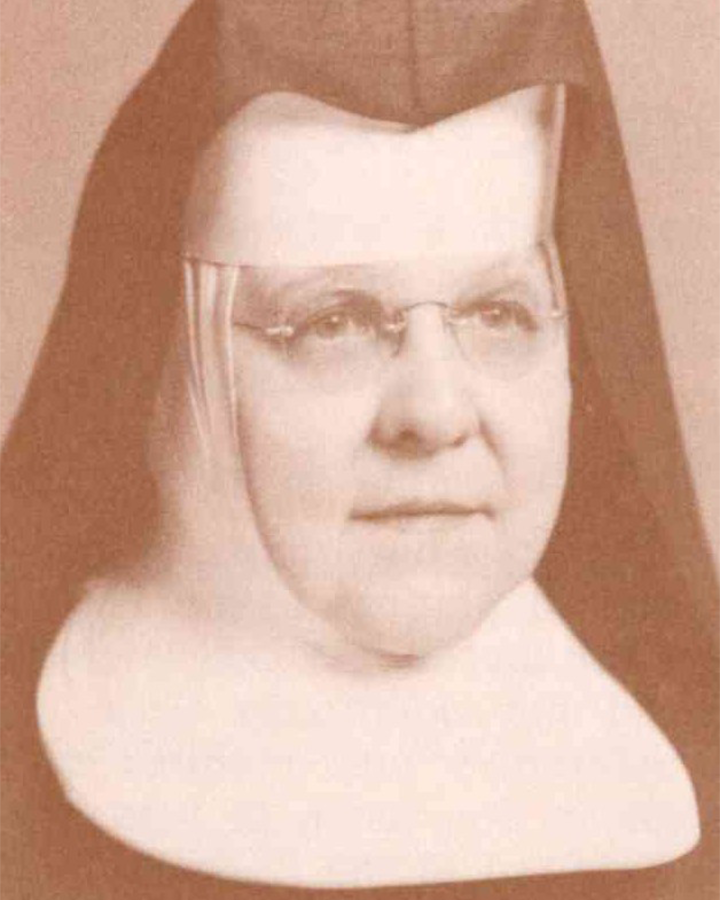
Sister Mary Domitilla Thuener, OSB
First Dean and founding president of Villa Madonna College (1921-1929)
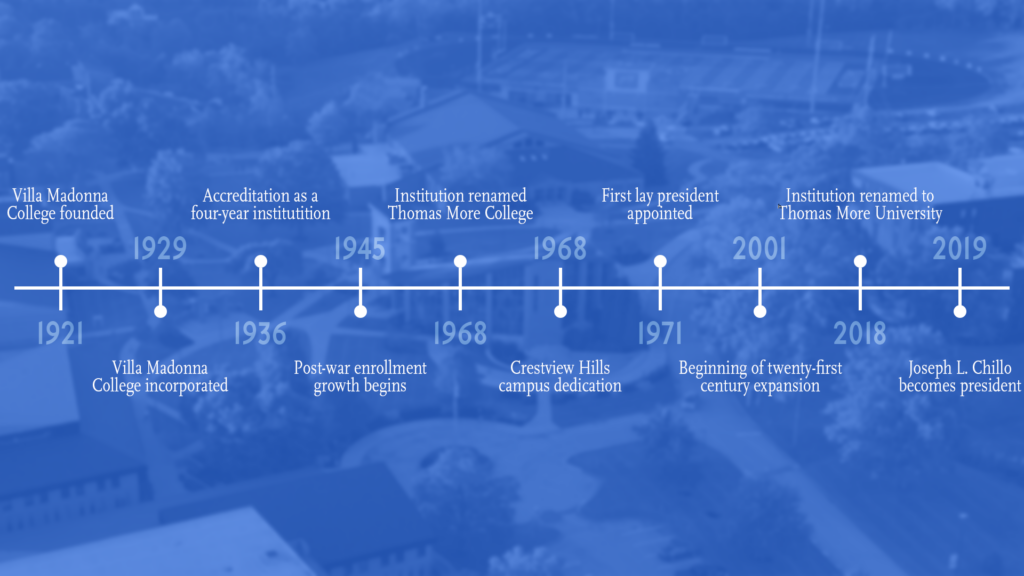
Sister Mary Domitilla Thuener is remembered as a foundational figure in Thomas More University’s origin story. Her leadership helped shape Catholic higher education in Northern Kentucky and ensured Villa Madonna College’s growth into a fully accredited four-year institution by 1936, the institution that would eventually become Thomas More University.
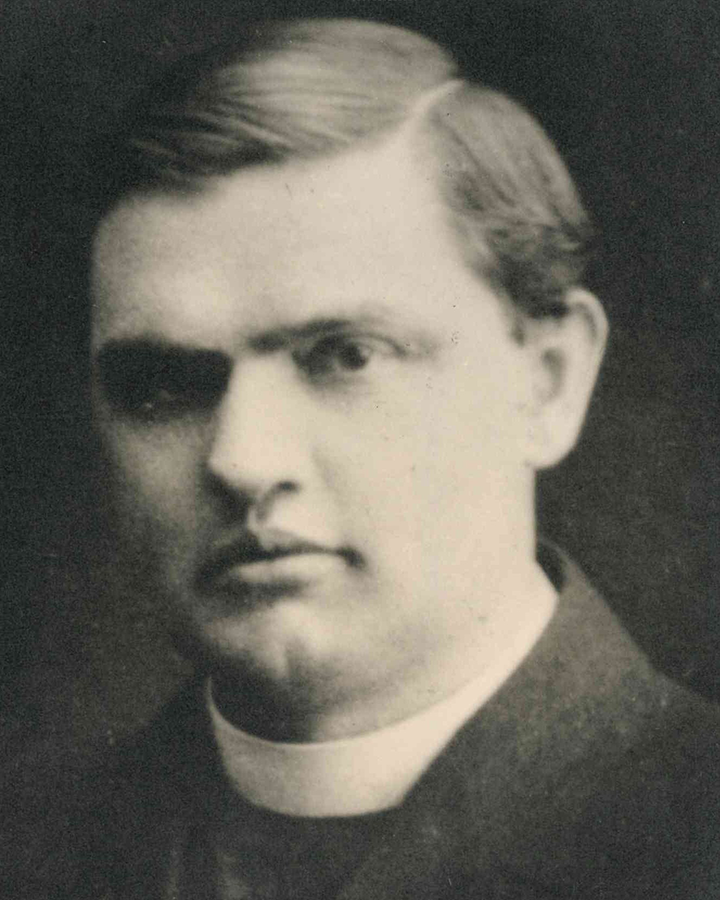
Rt. Rev. Monsignor Michael Leick
Dean and President of Villa Madonna College (1928-1943)
Monsignor Michael Leick is remembered as a devoted priest, educator, and visionary administrator whose leadership shaped the foundation of Villa Madonna College. His work helped secure accreditation and established a model of cooperative Catholic higher education that endures at Thomas More University today. After his death on May 2, 1943, students and alumni established the Monsignor Leick Memorial Endowment Fund in his honor. He was buried in the Priests’ Section of St. Anne Convent Cemetery, Melbourne, Kentucky.
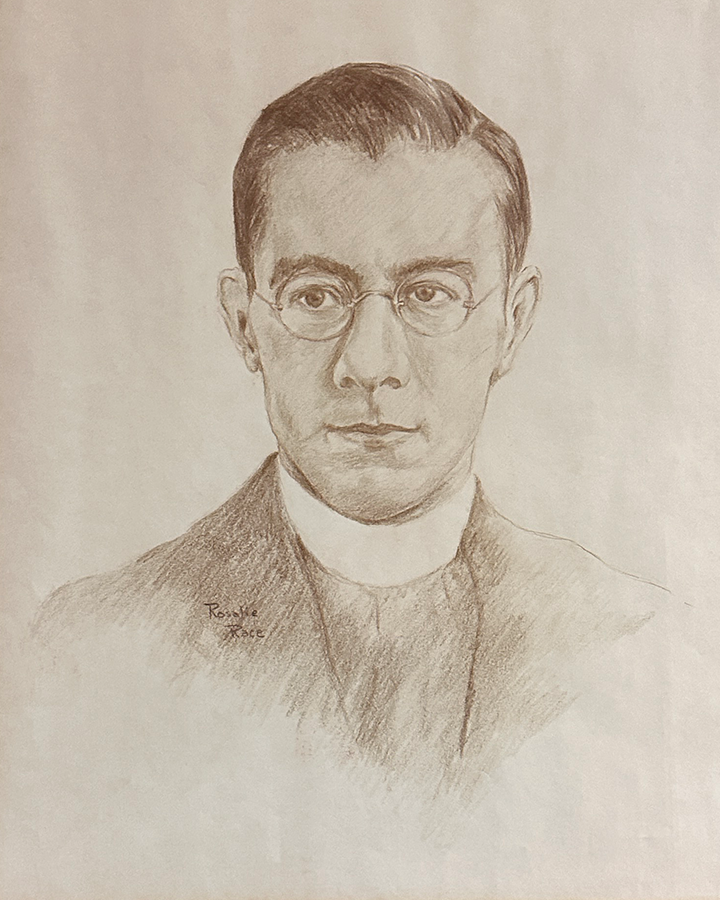
Rev. Edmund Joseph Corby
Dean and President of Villa Madonna College (1943-1944)
Father Edmund Corby’s brief but impactful tenure as President ensured stability and direction for Villa Madonna College during wartime uncertainty. Known for his scholarly rigor and deep pastoral concern, he helped shape the college’s academic integrity and Catholic mission. His death in March 1944 was widely mourned among students, faculty, and the Sisters of Notre Dame, who remembered him as a devoted priest and educator. He was buried in St. Mary Cemetery, Fort Mitchell, Kentucky.
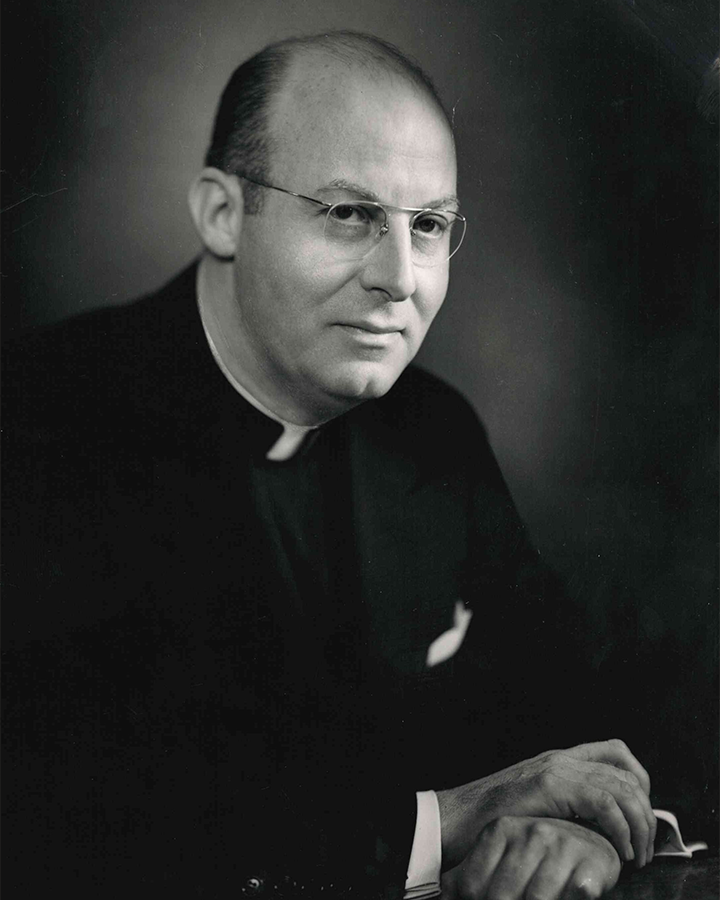
Rev. Thomas A. McCarty
Dean and President of Villa Madonna College (1945-1949)
Father Thomas McCarty’s career embodied intellectual rigor and pastoral compassion. As Dean of Villa Madonna College, he fostered academic and spiritual formation during a crucial era in Catholic higher education. Even amid years of suffering, he remained a model of patience and holiness. Colleagues described him as ‘a man of high intelligence and great dignity’ whose enduring faith sanctified his life of service. He was buried at Calvary Cemetery in Lexington, Kentucky, following a Pontifical Requiem Mass celebrated by Bishop Richard H. Ackerman.
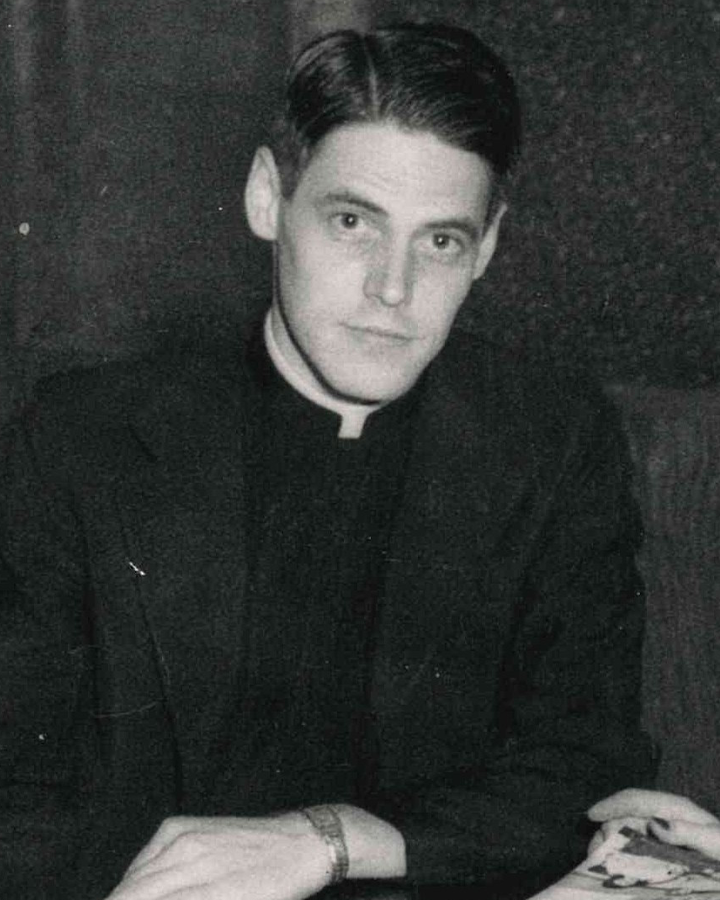
Rev. Joseph Z. Aud
Dean and President of Villa Madonna College (1949-1951)
Father Joseph Aud is remembered as an exemplary priest, administrator, and chaplain whose brief life had lasting influence. He modernized Villa Madonna College’s administration, supported lay and religious collaboration in higher education, and embodied the ideal of priestly service through scholarship, compassion, and military ministry. His devotion to St. Bonaventure led to his burial in its cemetery—the first priest to have a funeral from the new Christ the King Seminary Chapel.
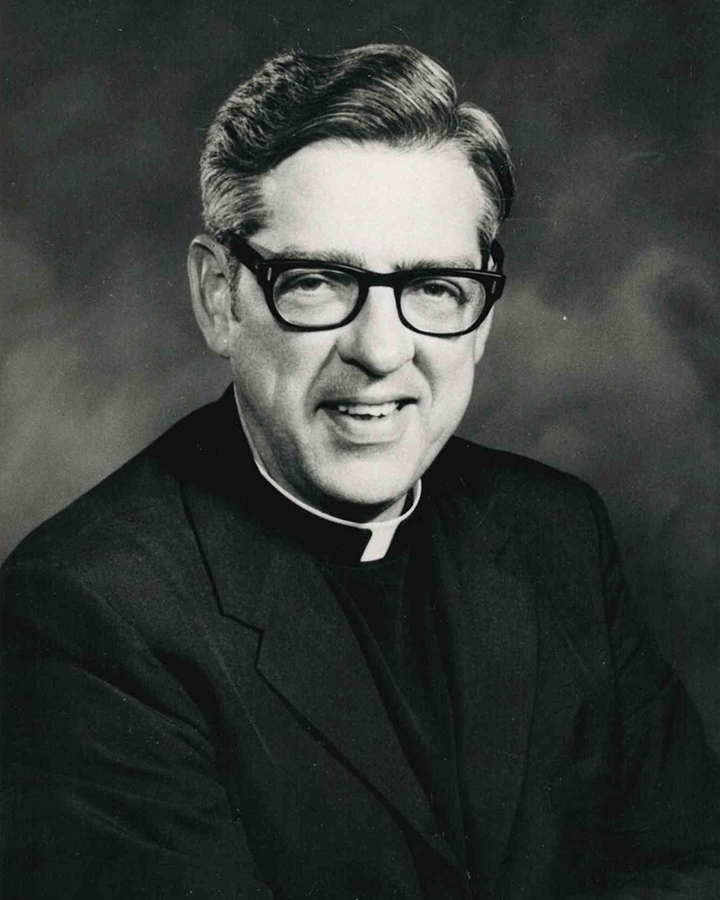
Reverend Monsignor John F. Murphy, S.T.D.
Dean and President of Villa Madonna College and Thomas More College (1951-1971)
Msgr. John F. Murphy is remembered as one of the most influential leaders in Thomas More University’s history. He transformed Villa Madonna from an urban diocesan college into a regional liberal arts university. His leadership ensured that the college’s physical relocation, academic modernization, and moral vision were unified under a shared Catholic mission. The Crestview Hills campus and the name Thomas More College remain enduring symbols of his transformative legacy.
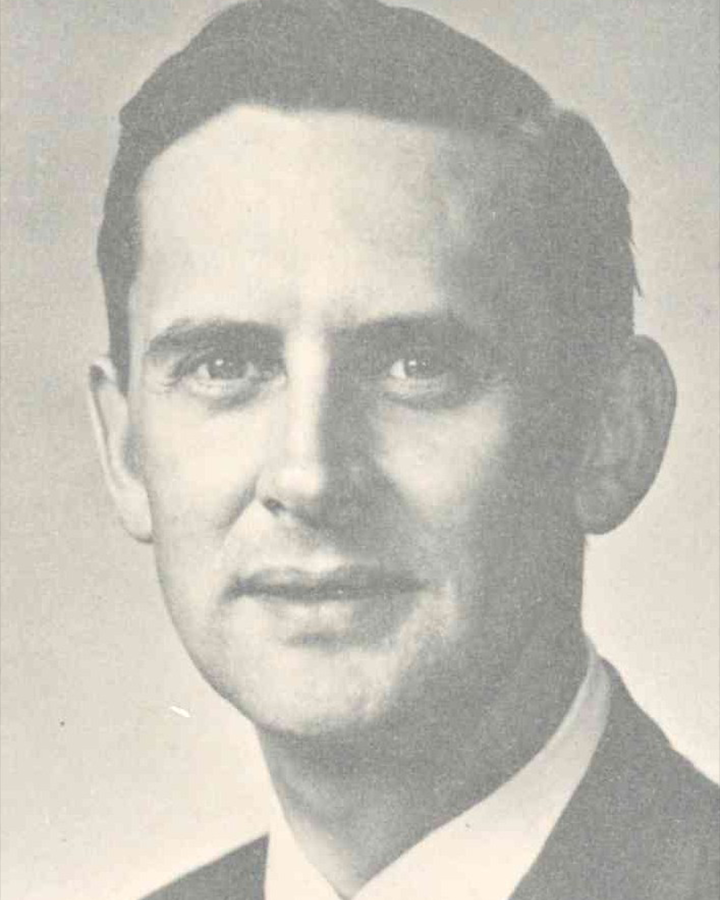
Dr. Richard A. DeGraff
First Lay President of Thomas More College (1971-1978)
Dr. DeGraff’s presidency represented the maturing of Thomas More College as a fully independent Catholic liberal arts institution. He strengthened its academic programs, expanded its funding base, and reinforced its mission of faith and service. His leadership helped secure the college’s foundation for continued growth into the 1980s and its eventual evolution into Thomas More University. Though his presidency was marked by challenges, his vision and strategic initiatives left a lasting imprint on the institution’s character and trajectory.
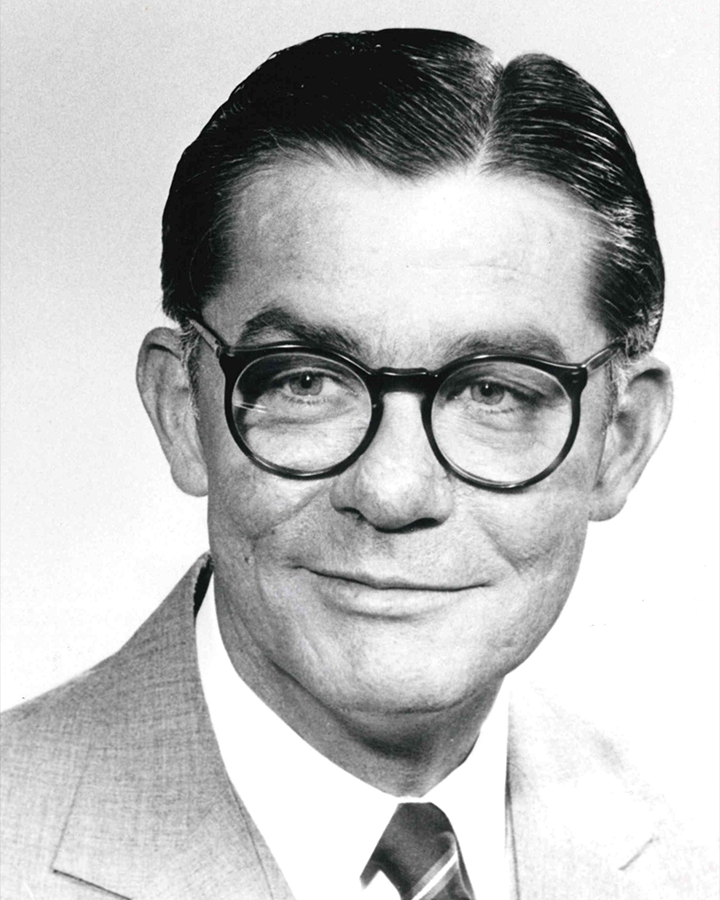
Dr. Robert J. Giroux
President of Thomas More College (1978-1982)
Dr. Giroux’s presidency represented a period of renewed visibility and engagement for Thomas More College. He broadened the institution’s reach through legislative advocacy, regional partnerships, and a focus on adult and continuing education. His leadership reaffirmed the college’s Catholic mission within the modern educational landscape, striking a balance between tradition and reform. The foundations he built in public relations, program development, and strategic planning helped position the college for the administrative stability and growth that followed under Dr. Thomas Coffey in the mid-1980s. His presidency also strengthened Thomas More College’s reputation within the broader network of Catholic higher education, ensuring its continued recognition as a leading institution of faith-based liberal learning in the region.
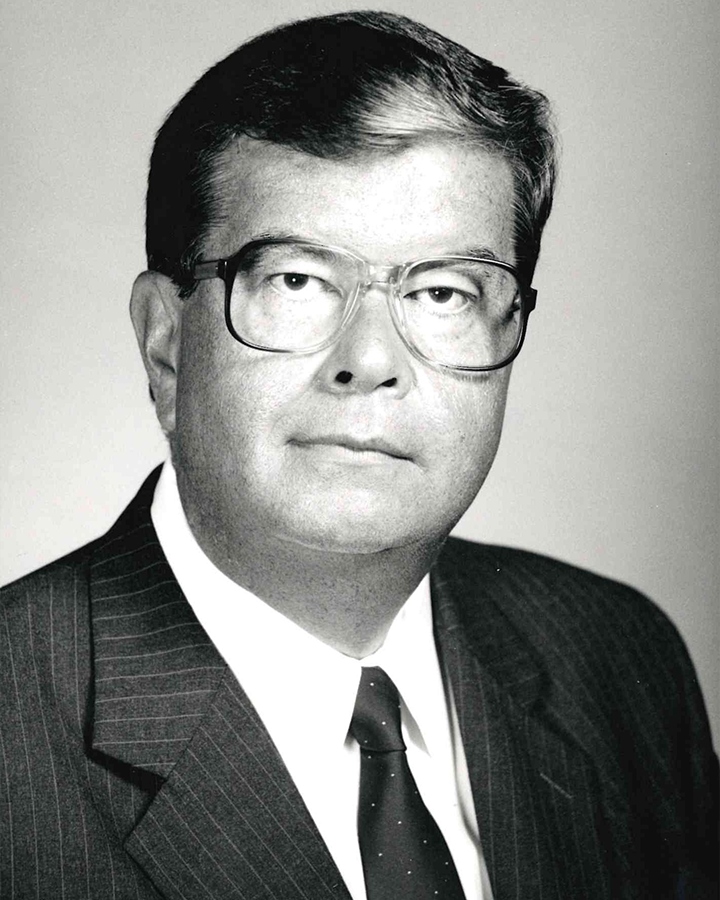
Dr. Thomas A. Coffey
President of Thomas More College (1983-1986)
Dr. Coffey’s presidency strengthened the foundations for Thomas More’s eventual transition to university status. His initiatives in academic renewal, student life, and community engagement reflected a forward-looking vision that helped define the College’s Catholic identity in the modern era. His legacy endures in the institution’s continued emphasis on academic excellence, leadership, and service.
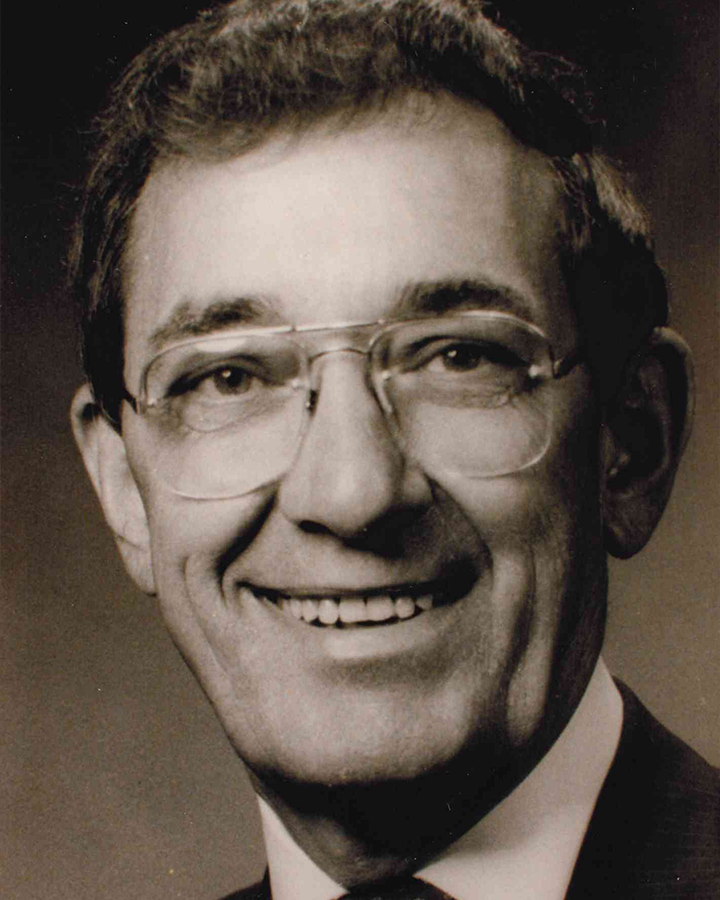
Dr. Charles J. Bensman
President of Thomas More College (1986-1992)
Dr. Bensman’s presidency marked a pivotal era of renewal and modernization for Thomas More College. His reforms strengthened institutional governance, fiscal responsibility, and academic rigor. The programs and structures he established laid the groundwork for the college’s continued growth and eventual transition to university status in 2018. His legacy endures through the values of excellence, faith, and community engagement that define Thomas More University today.
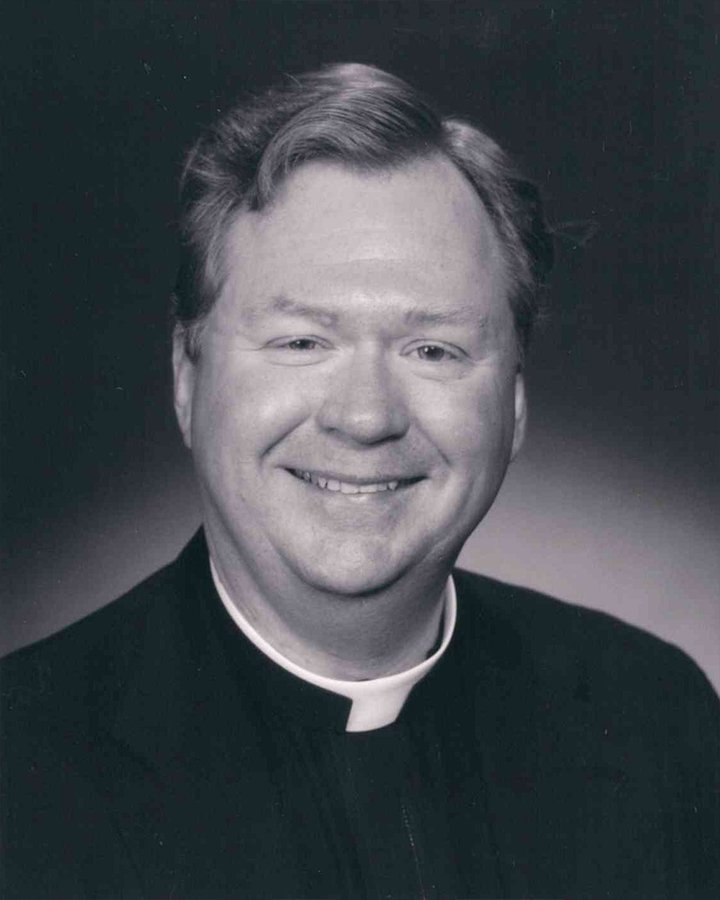
Reverend Dr. William F. Cleves
President of Thomas More College (1992-2001)
Father William F. Cleves’ presidency is remembered as a period of spiritual renewal, institutional stability, and academic progress. He strengthened Thomas More’s Catholic identity, expanded its programs, and fostered an enduring sense of community. His leadership, combined with philosophical depth and pastoral wisdom, leaves a legacy of faith, service, and intellectual integrity that continues to define Thomas More University.
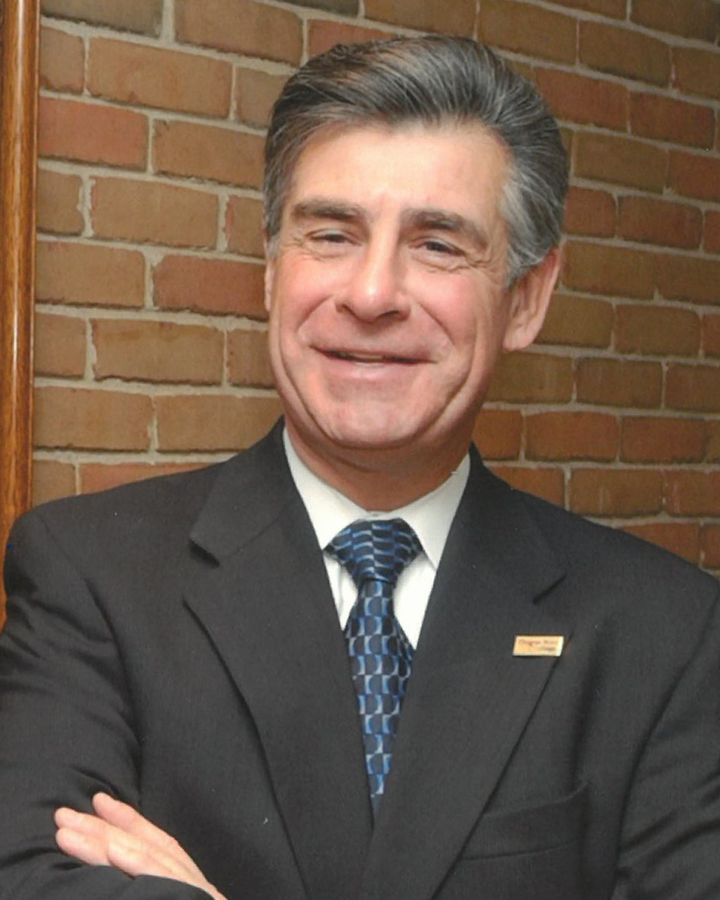
Dr. E. Joseph Lee II
President of Thomas More College (2001-2004)
Dr. Lee’s tenure strengthened Thomas More College’s visibility, reaffirmed its Catholic mission, and positioned it for continued growth into the 21st century. His presidency helped transition the institution toward broader external relations and strategic planning that later supported its move toward university status. He left a lasting legacy of mission-driven leadership and commitment to student success.
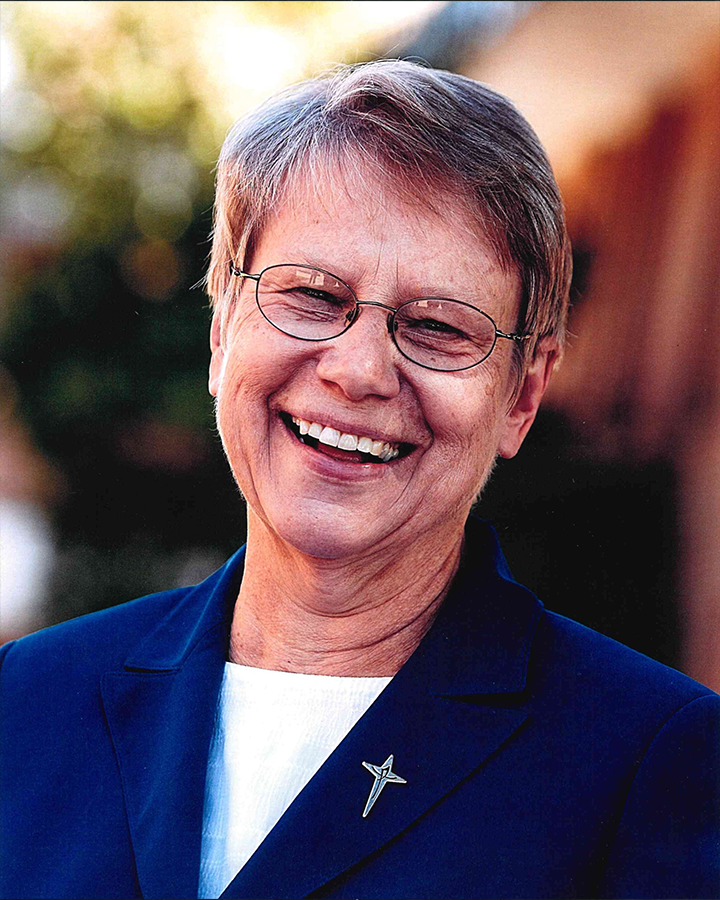
Sister Margaret Stallmeyer, CDP
President of Thomas More College (2005-2013)
Sister Stallmeyer emphasized the value of both a liberal arts education and the Catholic intellectual tradition. She led the Strategic Plan from 2005 to 2010 and secured a grant of $1,175,000 towards a 2.5 million science renovation project. Her presidency moved the institution forward without sacrificing the values held since 1921. In her own words, Sister Stallmeyer found that the three distinguishing factors of this institution were “its Catholicity, its liberal arts education and its adaptability.”
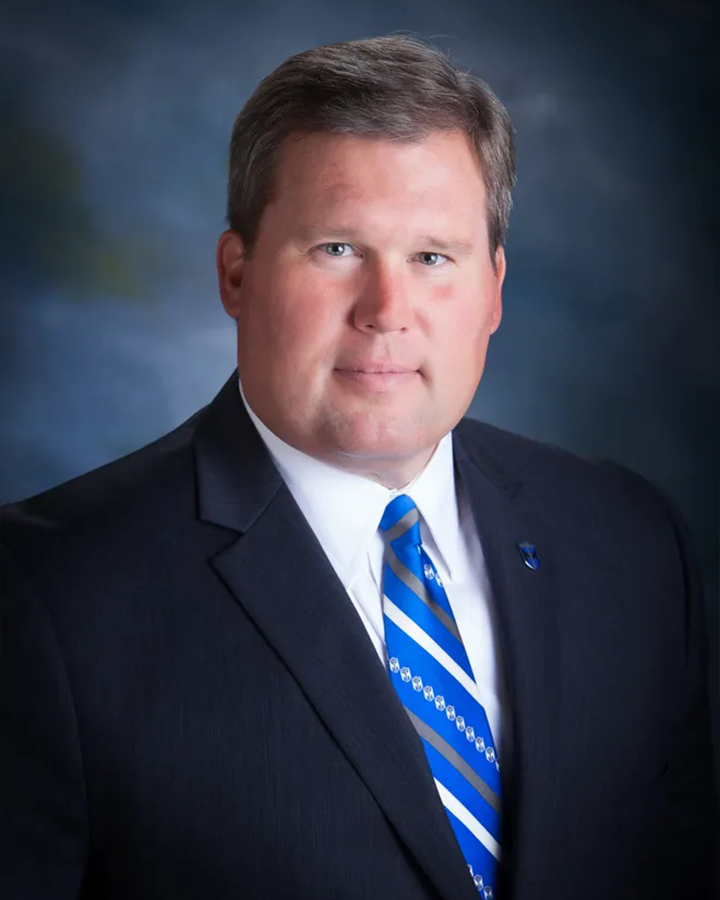
Dr. David A. Armstrong, J.D.
President of Thomas More College (2013-2018)
Dr. Armstrong’s presidency left a tangible legacy of enhanced student support infrastructure, stronger fundraising and donor relations, increased visibility for Thomas More College, and new programmatic initiatives that reinforced its Catholic liberal arts mission. His work helped position the institution for its transition toward broader institutional status and program expansion. The Success Center in particular remains a cornerstone for student success and academic support at Thomas More.
About This Exhibit
This digital exhibit was developed by Thomas More University’s Benedictine Library and Archives as part of the More Memories project, an initiative to preserve and share the history of Thomas More University through increased digital access to archival materials.
Research Acknowledgment
The Benedictine Library and Archives gratefully acknowledges the research of Dr. Amy J. Malventano, former University Archivist and Special Collections Coordinator. Her research on the history of Thomas More University’s presidents provided the foundation for the biographical content presented in this exhibit.
Exhibit Development
The Benedictine Library and Archives thanks the Thomas More University Institutional Advancement division for its assistance in designing and implementing this digital exhibit.
Funding Acknowledgment
This project is supported with funding from the Kentucky Historical Society. For more information, see history.ky.gov.