Undergraduate Summer Research Internships
2026 Summer Research Internship Applications Open Now
Internship applications due at 5 PM Eastern, Friday, February 13, 2026
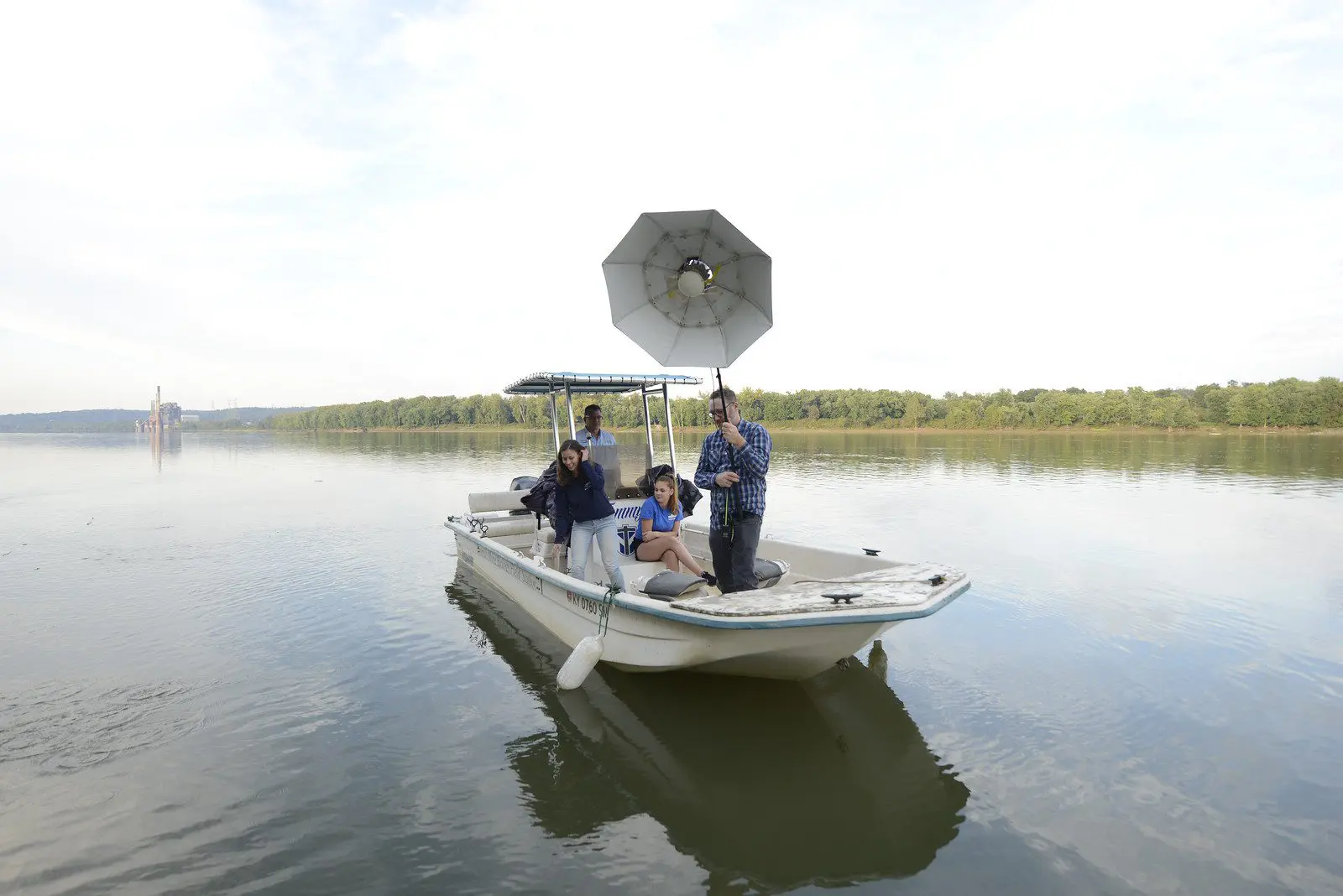
Each summer, the Thomas More University Biology Field Station, home of the Center for Ohio River Research & Education (CORRE), offers paid undergraduate research internships for students. Internships begin in late May, end in early August, and include a short break at the mid-point the week of July 4, free housing, and a stipend. Students are responsible for food and travel. The Field Station is located on the banks of the Ohio River in Northern Kentucky, about half an hour from Cincinnati, Ohio.
These internships are in the fields of aquatic biology, conservation, ecology, and environmental science. Projects involve animal husbandry, bioassessments/biomonitoring, climate change, fisheries, harmful algal bloom monitoring and toxicology, among others. In addition to gaining hands-on research experience, interns will expand their personal and professional networks, collaborate with local agencies and non-profits, visit nearby laboratories and research facilities, listen to diverse research seminars, and contribute to our K-12 STEM Outreach programs. These positions are funded by the Duke Energy Foundation, the National Science Foundation, Sanitation District No. 1 of Northern Kentucky, the Terracon Foundation, and Thomas More University.

PROGRAM FEATURES
- Increased understanding of and proficiency with research practices and processes
- Increased understanding of discipline-specific concepts and content
- Stronger skills in discipline-specific methods and procedures
- Expanded professional networks
- Greater sense of belonging in the scientific community
- Increased interest in a career in general STEM field
- Increased interest in a career in field-based science
- More refined career goals
- Stronger professional skills
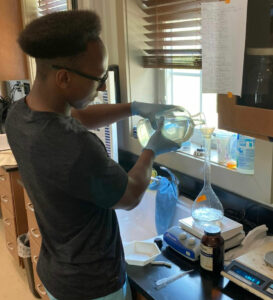
Students develop small-scale independent study projects on topics of their own choosing and present results at a poster symposium at the conclusion of the summer.
Summer 2025 independent study projects included the following titles:
- An Analysis of Escherichia Coli and Other Coliforms in Local Streams During Dry and Wet Weather Events – Northern Kentucky”
- “Analyzing Freshwater Mussel Species Distribution and Richness in the Ohio River Mainstem Using ArcGIS”
- “Comparative Analysis of Heavy Metal Filtration in Native and Invasive Mussels: A Focus on Manganese”
- “Comparing Water Quality Indicators to the Presence and Species Identification of Cyanobacteria”
- “The Effects of Heightened Salinity Levels Caused by Road Salt Runoff on the Growth of Duckweed (Lemna minor)”
- “The impact of visual exposure to a predator on the fecundity of Fathead Minnows (Pimephales promelas)”
- “Defining Viable Host Species of Lampsilis siliquoidea”
- “Stream Health Assessment of a Site in Gunpowder Creek in Boone County, Kentucky”
- “Uptake and Retention of Escherichia coli in Dreissena polymorpha (Zebra Mussel) vs. Amblema plicata (Threeridge Mussel)”
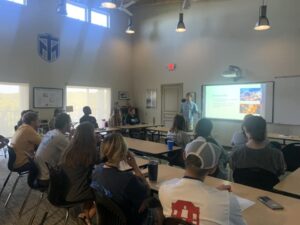
Student interns will hear seminars from diverse scientific professionals on topics including current research, preparation for graduate school, conducting a job search, and more. Former interns have gone on to work for, or with, seminar speakers that they met during their experience at the Field Station. Seminar titles and speakers from 2025 included:
“Careers in Aquatic Conservation and Ecology” by Dr. Wendell Haag, Research Fisheries Biologist, U.S. Forest Service
“Connecting to Nature through Community Science” by Susan Brown, Conservation Education Specialist, Boone County Conservation District
“Embracing a Winding Career Path in STEM” by Dr. Allison Parker, Associate Professor of Biology, Northern Kentucky University
“The Muskingum Watershed Conservancy District, a Unicorn of Unicorns in Flood Mitigation and Conservation” by Craig Butler, Director, Muskingum Watershed Conservancy District
“Crystal Balls and Curve Balls: Embracing Uncertainty in Science” by Dr. Anna Sjodin, Biologist, U.S. Environmental Protection Agency
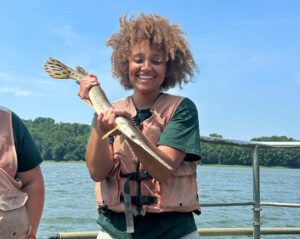 All interns will contribute to our K-12 STEM Outreach programs, gain confidence as environmental educators, and learn to translate science to diverse audiences. Our summer education and outreach programs include the following:
- Daylong, on-site field trips
- Overnight and day summer camps for grades 3-12
- Classroom visits
- Tabling at community expos and events
- Annual Concert for Conservation

Please click here to apply by 5 PM Eastern, Friday, February 13, 2026
Please contact Dr. Chris Lorentz ([email protected]) for any questions.