Dr. Robert J. Giroux
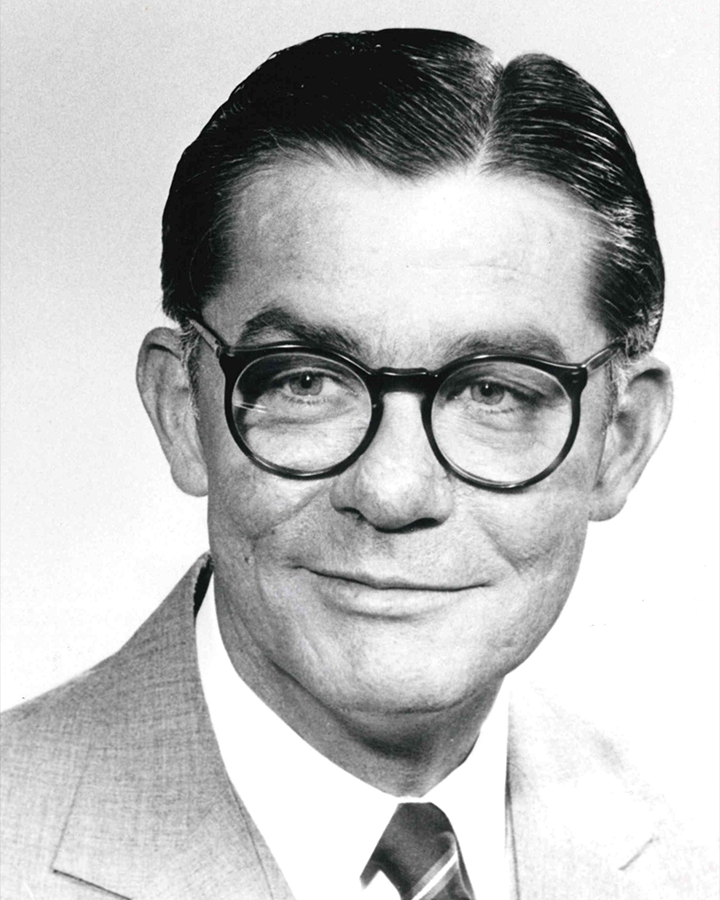
President of Thomas More College (1978-1982)
Before joining Thomas More College, Dr. Giroux served as a teacher, guidance counselor, and administrator in the Catholic education system. He joined St. Michael’s College (Vermont) in 1962 as Director of Extension Services and was later appointed Vice President for Academic Affairs and Dean in 1967. In 1969, he became President of Clarke College (Dubuque, Iowa), leading that institution for eight years before serving as Chancellor (1977–1978). His tenure at Clarke was marked by academic innovation, expansion of continuing education programs, and successful fundraising initiatives supported by the Wahlert Foundation and the National Science Foundation. He was widely respected for combining academic vision with a collaborative leadership style rooted in Catholic values and service.
After leaving Thomas More in 1982, Dr. Giroux became the seventh President of Kansas Newman College (Wichita, Kansas), where he continued his commitment to academic planning, fundraising, and Catholic education. He led a successful $2 million campaign and expanded community partnerships in the Midwest. Throughout his career, he was active in the American Association of Higher Education, the National Catholic Education Association, and the National Association of Private Colleges and Universities. He was also a recognized author and lecturer on religion, education, and the Scouting movement.
His administration emphasized outreach, legislative advocacy, and renewed emphasis on Catholic higher education as a public good. He strengthened the college’s relationships with the Diocese of Covington, the Commonwealth of Kentucky, and regional business and civic leaders. Dr. Giroux was a vocal proponent of bridging the gap between public and private education, stating, “We stand for freedom of choice … and we must work to bridge the gap between public and private education.” His public engagement and legislative work significantly raised Thomas More’s visibility throughout Kentucky and southern Ohio.
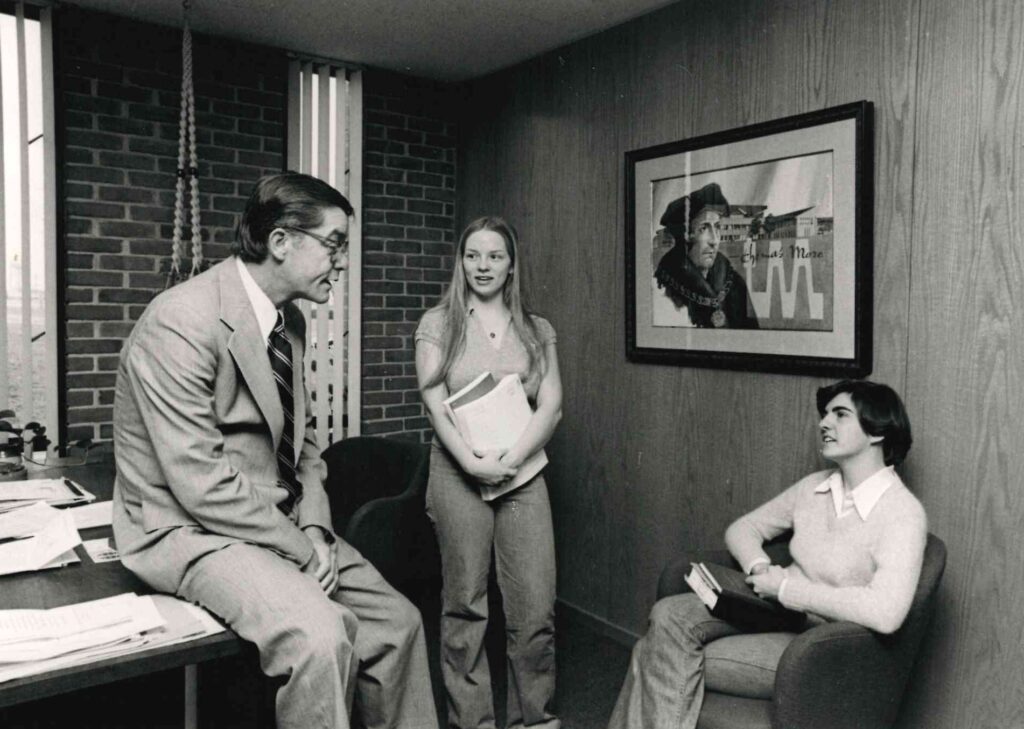
Under Dr. Giroux’s leadership, Thomas More College expanded access to higher education by developing adult and continuing education programs through regional learning centers while advocating for state and federal tuition assistance to benefit students attending private institutions. He also fostered stronger partnerships with Northern Kentucky University and other public colleges to enhance regional cooperation in higher education. Through campus renovations and long-range strategic planning, he further strengthened the College’s physical infrastructure, accreditation efforts, and long-term enrollment stability.
Dr. Giroux’s philosophy as an educator and administrator was grounded in the belief that faith and intellect must operate in harmony. He viewed Catholic higher education as both a spiritual and civic vocation, where academic rigor serves the larger purpose of moral and human formation. Education, in his view, was not merely the transmission of knowledge but the cultivation of wisdom, character, and responsibility within the framework of the Christian tradition. Giroux consistently emphasized Catholic identity as an active, evolving mission, urging institutions like Thomas More College to “reaffirm their Catholicity and educational excellence while charting their own destiny.” He believed that renewal must be constant — “a daily rebirth of intellectual and academic vitality” — and that the liberal arts should foster reflection, community service, and critical engagement with the modern world.
Administratively, Giroux was a collaborative and advocacy-driven leader. He worked to strengthen dialogue between faculty and administration, believing that shared governance and mutual respect were crucial to the institution’s health. His leadership style valued consultation and inclusiveness, seeking consensus while maintaining clear vision and accountability. He was also an outspoken advocate for the role of private Catholic colleges in public life, arguing that education policy and funding must respect freedom of choice and the diversity of educational traditions. His ability to engage legislators, business leaders, and church officials reflected a belief that Catholic colleges must serve both the Church and society by preparing students to live responsibly in faith and in the world.